
Hugh Ryan is Sorry
but only a little bit

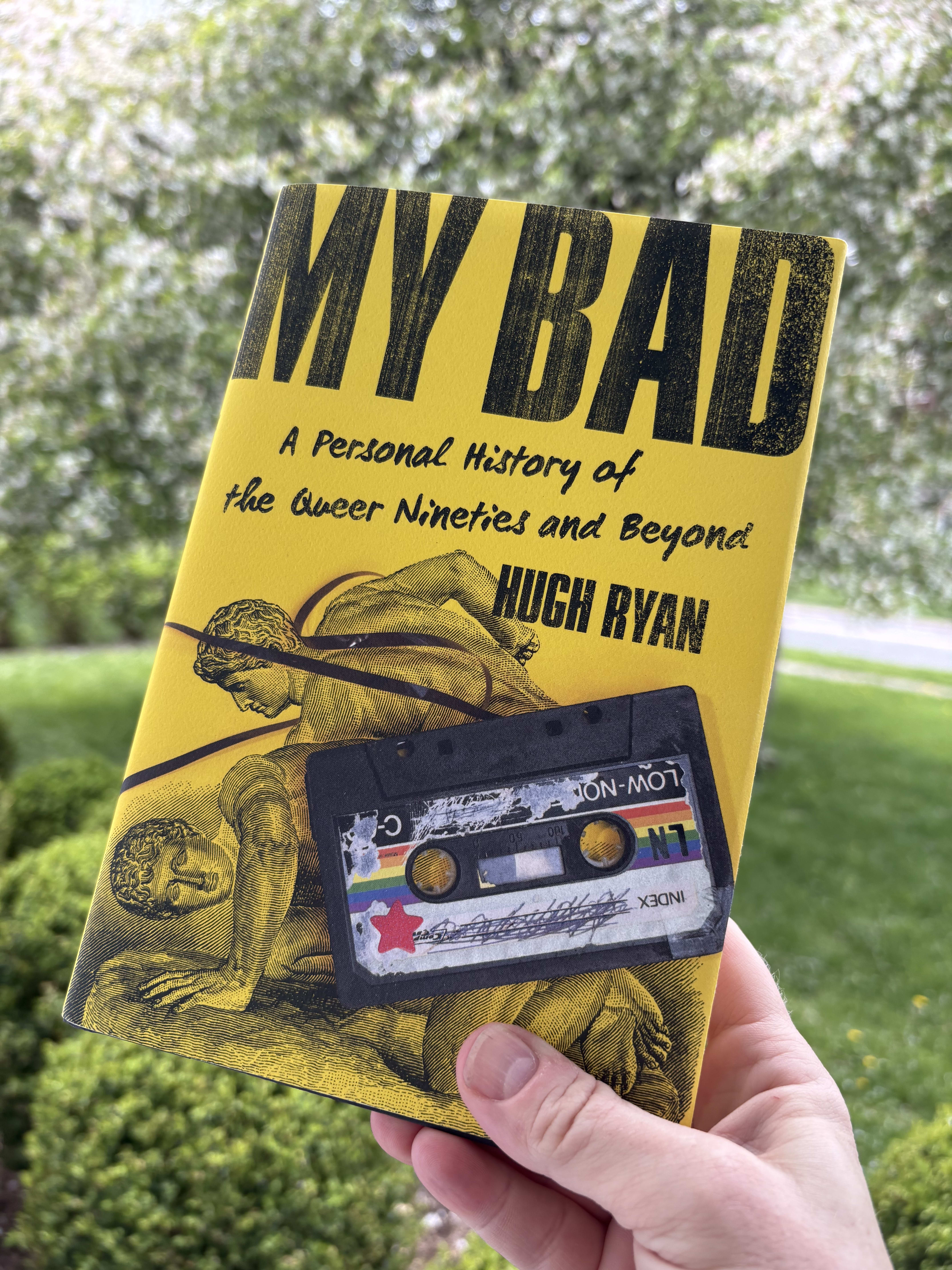
Back in 2020, after I’d established that I wanted to move to Brooklyn, I bought a book called When Brooklyn Was Queer by the historian Hugh Ryan. Given that I tend to come to everything late (my sexual orientation, my gender identity, Brooklyn itself) I’ve developed a tendency to use books to fill in my own un-lived back story, and so was delighted to discover that someone had written a book which promised to tell everything I never knew I needed to know. The book did exactly what it said on the tin, but what I remember most about reading it (and his subsequent book, The Women’s House of Detention) was constantly having to turn to the back cover to check that the author was cisgender, because neither book sounded like they’d been written by a man. I couldn’t quite explain why, other that I’d just transitioned and was still trying to figure out my own place on the trans spectrum—a spectrum that had turned out to be considerably wider than I’d originally understood it to be—which meant I was seeing signs of gender-variance everywhere I looked, my antenna constantly raised for cues of gender nonconformity. I was also researching my first book of essays, Adult Human Male, in which I questioned whether people transitioned in a linear sense, or whether it was more accurate to say that we aligned our external presentation with our internal identities, which I felt opened up more possibilities for more people and unstuck us from this problematic issue of some people feeling like they weren’t trans enough to qualify as trans, and other people feeling like if they wanted to dial back their transness to a more comfortable spot that they might be accused of detransitioning and therefore letting the side down, so to speak. Anyway, in this state of constant trans arousal (intellectually speaking) I could hear a certain transness radiating out of the pages of When Brooklyn Was Queer, despite the author being quite clearly a bearded, cis, gay man.
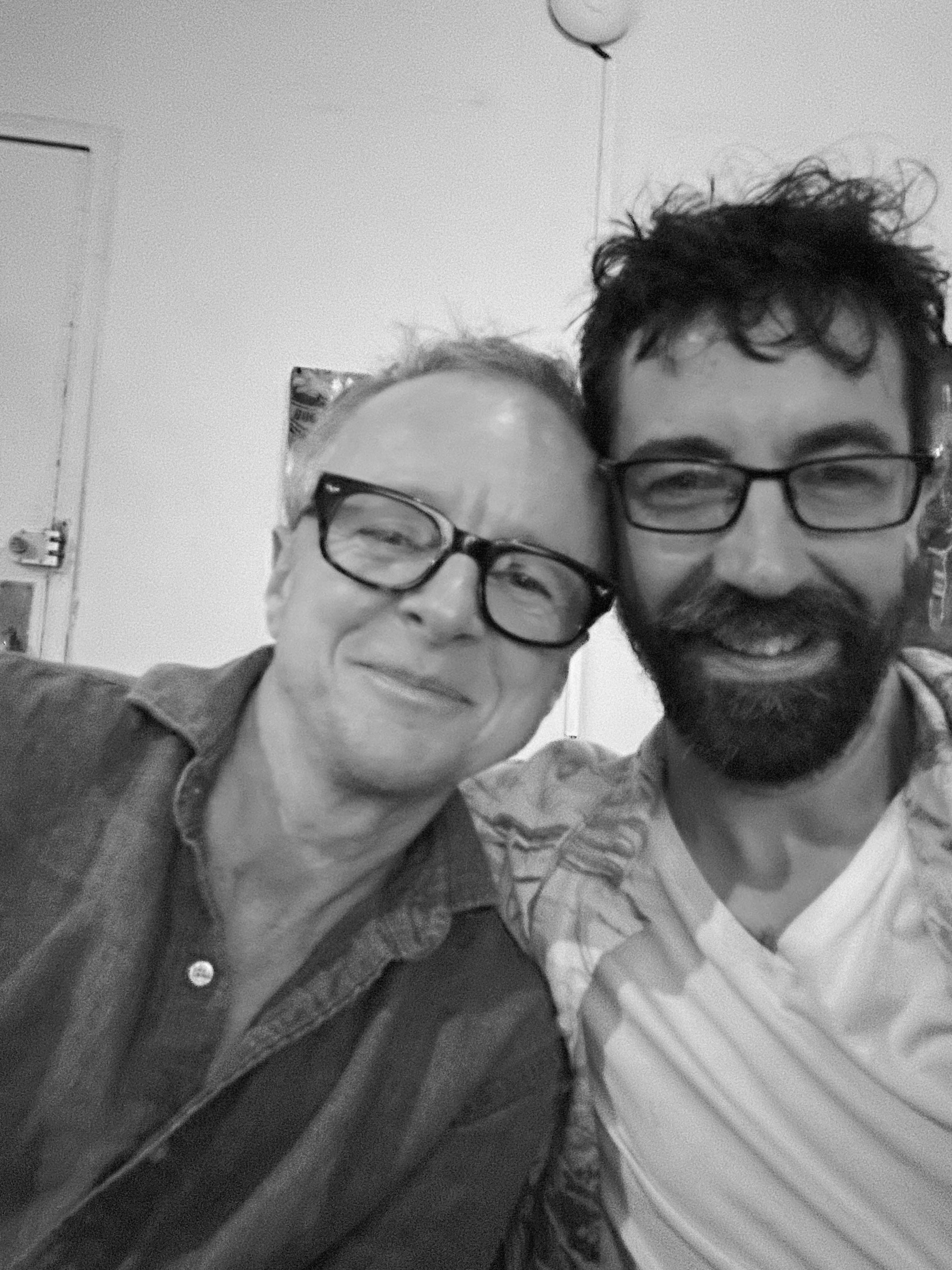
A few years later I’d just got home from the Provincetown Literary Festival, where I’d been promoting Adult Human Male, when I got a DM from Hugh, who said he’d been sitting in the audience, liked the way I thought, and would love to meet up. So we made a plan to go for a walk in Prospect Park. There are few times in my life that I’ve connected on an intellectual level with someone so instantly, but I had a total emotional hangover after that first meeting with Hugh, and I think we only spent an hour together. I’d just sold my memoir, Frighten the Horses, and he was just starting to write his memoir, My Bad, and we were talking about the inherent problems of writing about gender combined with the intense vulnerability of writing about our personal lives, and I can’t remember exactly where we were in Prospect Park, only that it was by some dumpsters, when I stopped and said to him, do you think you might be a little bit trans? And he said, yes, but it’s complicated.
Hugh was the first writer I’d met in person who was having the same kind of complex thoughts that I was about gender, and who was able to help me translate those thoughts into words that made sense. It was something about the combination of his own gender nonconformity (which is so non-conforming it lives outside the binary-nonbinary binary*) but also the fact that he could put it all into context because of his background as a historian. We were in a coffee shop in Williamsburg several months later, after having spent a couple of hours sitting in the sunshine in the Marsha P Johnson park, when in response to an absolute mess of ideas that I’d just thrown down in front of him, he told me that gay people hadn’t historically been considered gay until society decided they needed to be segregate from straight people, and that trans people hadn’t been considered trans until society decided they needed to be segregated from gay people, which meant that not only were gay and trans people invented, but straight and cis people were invented too.
Hugh, of course, explained this with far more eloquence than I’m doing here, but it was revelatory to me - all these terms, all these boxes we try to fit ourselves into, were just inventions. I was mind-blown. My gut feeling that we’re all just human beings trying to align ourselves more closely with our own wildly varied identities, and that the boundaries we put up around those identities are not only arbitrary and unnecessary, but can sometimes be counterproductive and oppressive, had a historical foundation. Not only did Hugh not think I was crazy, but he had years of research as a historian to back up these ideas, not to mention an innate ability to verbalize them in a way that made them not only comprehensible, but also exciting. I felt seen and understood by him in a way that felt transformative. What I didn’t know then was that it was the beginning of a beautiful friendship, one that is based not only in a mutual respect for each other’s work and ideas, but also in an ability to be honest and vulnerable with each other about who we are as humans. Hugh is sensitive, and kind, and thoughtful, and on top of all this he is also very funny, which has always been the quickest way to my heart.
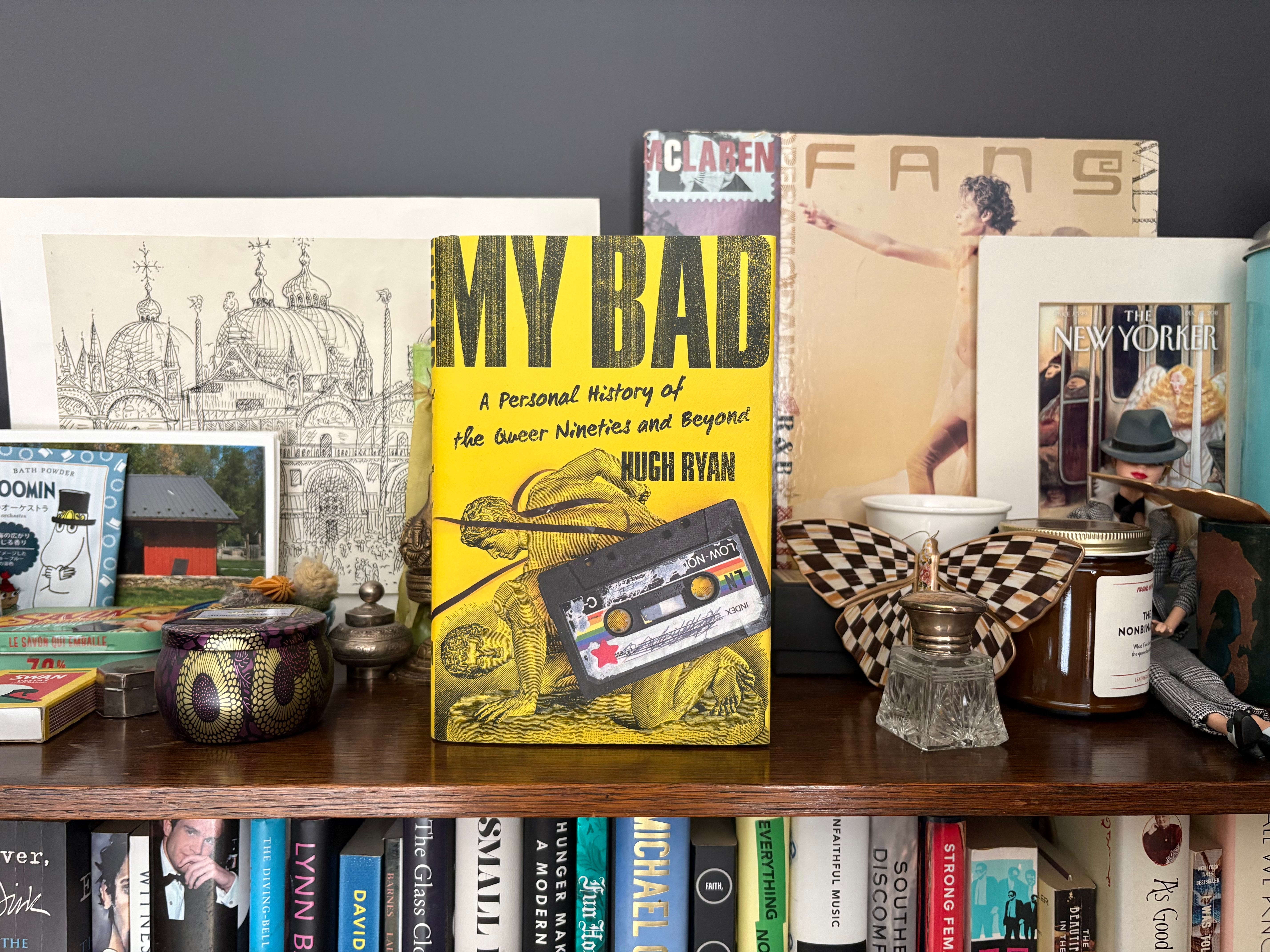
I mention this, because on May 26th you too can now enjoy all this brilliance and humor, when his third book, My Bad: A Personal History of the Queer Nineties and Beyond, hits the bookstores. I had the good fortune of being allowed to read an early draft, and then got my hands on a galley of the final edited manuscript, and all I can say is that this book is an absolute ride. It’s part memoir, part apology, part gender analysis, part queer history, and it’s also wild, chaotic, page-turning, heart-breaking, and occasionally jaw-dropping, and imbued throughout with Hugh’s fabulous sense of humor.
The book opens with Hugh happily indulging in some nineties nostalgia repackaged in a modern TV show, until his “brain kicks in.” For a moment he doesn’t understand why his brain is being a killjoy, until he realizes: “It’s the gays. The gays. The endless fucking gays. They traipse lighthearted through the world. They’re out to all their friends. No one ever hurts them, or if they do, they apologize before the end of the episode. Their besties are never casually homophobic. They have supportive parents and romantic partners, and they know themselves so well. Bullshit, my brain snorts.”
What follows is a romp through Hugh’s queer life in the nineties, and when I say romp, this man did some shit. I consider myself to have lived many lives in my fifty-five years, but I’ve got nothing on Hugh. The stuff he got up to really couldn’t be replicated today, it’s a history of the sort of queerness that existed when homophobia was still rampant and largely socially endorsed, when there was no social media, nobody was recording what we were doing, and we weren’t all being policed by our own cellphones. Many of the stories speak to the sort of internalized homophobia (and/or transphobia) that arises as a direct result of coming of age at a time where there was very little in the way of structural or social support for queer people: the kind of deep rooted fear and shame that takes hold in the isolation of silence, which fortunately not so many people have to experience these days. Being under attack politically is not fun, having our rights systematically removed is not great, but at least we have voices now, we have each other, and we also have allies. In the eighties and nineties, before the days of the internet as we know it now, all of those things were much harder to find.
Our stories are different partly because I came of age when there was no internet at all, whereas Hugh came of age during the dawn of the dial-up connection. The shame and fear I felt as a closeted teenager swallowed up my entire identity because I was so isolated: there was nobody I could turn to, and I didn’t want to admit to anyone how lonely I was, because I was young and I thought admitting to loneliness was a sign of failure. Because I stayed silent, that shame and fear continued to grow until by my forties it had completely consumed me, making it harder to come out even as the world started to change.
I then, paradoxically, felt shame that I’d stayed closeted for so long, that I didn’t have the courage to come out earlier, as if my inability to be clear about who I was revealed some kind of moral failing on my part. Hugh’s story is almost the polar opposite of mine: where I, out of fear, did nothing, he, despite his fear, tried everything. Both of us made a bloody awful mess of it, and that’s why his book brings me so much relief: there was no right or good or noble way to do this back then, we were all just flailing blindly in the dark.
Reading My Bad, I sometimes felt as if I were being allowed to live a sliding doors version of my life vicariously through Hugh, the one I might have had if I’d transitioned as a teen, lived in America, and also happened to be super-hot. (Check out Hugh’s Instagram and you’ll see what I mean.) Whether you were in or out, cowardly or courageous, risk-avoidant or recklessly adventurous—in short, whether you regret what you didn’t do or regret what you did—Hugh’s story now exists to say, this was me, but it could have been you, and ultimately we’re all in it together. It’s a manifestation of the LGBTQ+ belief that despite our differences, somehow all our stories are interconnected, which means none of us are truly alone. This is why I still have hope for our future, because however hard some people might try, I don’t think it’s possible to reverse-engineer us back to a time where queer and trans people could be isolated out of existence.
I know Hugh was terrified of publishing this book, and I am deeply grateful that he overcame that fear, because the more our secret, silent histories are brought out into the open, the more real and defined we feel. By giving us a free pass to join his ride, Hugh has committed an act of gross generosity: as a singular record of the queer nineties, My Bad isn’t just a great book, it’s a historically important one, too. And did I mention it’s very, very funny?
Go buy a copy now.
Love, Oliver
*Lucian Kahan, quoted by Margaret Killjoy on Cool People Who Did Cool Stuff
I’d like to keep these posts free for everyone, but if you’d like to support my work as a writer, please consider upgrading to a paid membership, or buy a copy of my memoir, FRIGHTEN THE HORSES—an Oprah Daily Best Book of Fall—which is out now in paperback with Roxane Gay Books in the US and Grove Press in the UK.
CANNOT wait to read. Also, that cover! Genius.