
Magic Grow Capsules
and Hadron Colliders

I only have one New Year’s resolution, and that’s never to check BookScan again. From henceforth if anyone asks me how any of my books are doing, I will answer truthfully, I HAVE NO IDEA.
I had an interesting conversation last November with a couple of queer writer friends with whom I regularly meet for dinner in Brooklyn. I’d just got my second royalty statement from Grove, and I wanted to know how my numbers compared to theirs at this stage of their journey. They couldn’t tell me because they didn’t know: unlike me, neither of them had tracked their book sales.
I’m someone who likes to game things out. It’s a bad habit, I know, because I’m attempting to control something that’s beyond my control, but when it came to the post-publication stage of the memoir, I found it hard to figure out how much was too much and how little was not enough. I’d been told by numerous more experienced and successful authors than I that once a book is out of my hands I should let it go and move onto the next one, but I’d also been told by numerous more experienced and successful publishing people that marketing a book is becoming more and more the author’s responsibility, and I wasn’t sure how to hit that balance between “letting the book go” and “not giving it a fair chance.”
So I started tracking the book’s weekly sales through BookScan, to see which piece of promotional work I engaged in moved the dial. I wanted to understand what worked and what didn’t, and told myself I could only do this by going on podcasts or attending book fairs or sitting on panels or publishing essays, and then seeing afterwards which of these endeavors resulted in actual sales. In theory it seemed sensible: I was conducting an important personal analytical survey of the efficacy of promotional events. In practice all that happened was that I became obsessed with sales figures. What was my hardcover to audio-book ratio? Was I selling more or fewer copies via Kindle? Which territory was seeing the greatest number of sales? Would I earn-out? When would I earn-out? Was I supposed to have earned-out by now? What would happen if I didn’t earn-out? Every Friday morning I obsessively clicked on BookScan to check my sales figures for the previous week, and then compared it to the sales from the last week, or month, or year, or tried to assess through a series of intricate calculations how many people were borrowing my book from the library. It was awful. I’d reduced my post-publication experience to the equivalent of counting likes on a social media post, only with more math.
While convalescing from minor surgery last week I binge-watched I Love Dick, which I hadn’t watched before because I was put off by the name (I categorically do not love dick.) About half way through episode two, Kathryn Hahn’s character talks about the experience of sending a movie out into the world:
“It’s like, when you have the idea for a movie… in your mind, it’s huge, it’s like the whole world, it’s like your whole soul. And then you make the movie and suddenly it’s compared to every other movie that’s ever been made, and something that was so big becomes like the tiniest Russian nesting doll, like a piece of sand…” she makes a small gesture like blowing out a candle, as if her work could disappear into nothing as easily as that. Honestly, you should watch the show just for this one scene, her disillusion is so palpable and heart-wrenching. Anyone who’s ever put a piece of work out into the public domain will identify.
And yet. What Hahn’s character, in her despair, doesn’t take into consideration is that if just one person watches the movie, or picks up the book, the creator’s world suddenly expands again, like one of those Magic Grow Capsules which become a sponge animal when dropped in water. By reducing my readers to a number or a statistic, I’d failed to consider there were actual people out there who had picked up my book, and while reading it had gained access to the whole world I’d inhabited while I was writing it. What a gift: to be able to take that feeling of hugeness that Hahn speaks of, enclose it in the magic capsule of a book, and know that somewhere out there, your whole world is expanding back out to its original shape and form in someone else’s hands.
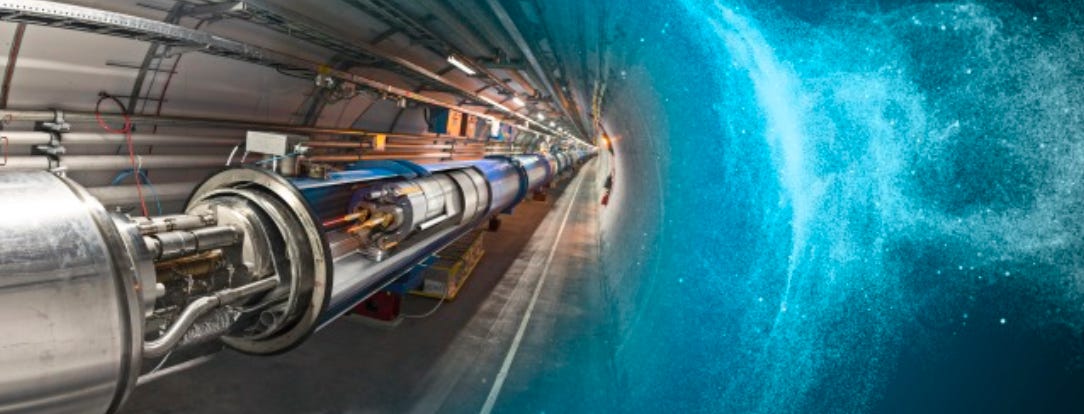
It’s good to remember this, because I’m about to dive back into my new manuscript, the first draft of which I’m a third of the way through. It’s going to be a long, hard, excruciating process, typified by a sort of rapid-bipolar-cycling through short periods of self-aggrandizement (while I’m drafting) followed by long periods of utter despair (while I’m re-reading what I just drafted). The drafting process feels like trying to squeeze bits of black, sticky tar out of my brain, I become an ogre, I’m not fit for human company, and yet it’s the best part. Revising is more satisfying, but drafting is more euphoric. I can’t explain why I love it so much, it doesn’t make sense, but it’s like turning my head into a Hadron Collider in which through an excruciating process of expansion and contraction* people and places that didn’t exist before magically appear. Maybe it’s because it’s so goddamn difficult to generate these new realities that it feels so good. This great essay in LitHub arguing against the use of generative AI for drafting says it all much better than I can: the tar has to come from your own brain, however hard it is to squeeze it all out. There are no shortcuts because this is how you write a book. Luckily all my kids are out of the house now so I can stumble blindly between irascible drafting-monster and brain-dead zombie without having to worry that it will bother anyone except the cat, who appears to like it, cats being what cats are.
It’s also exciting to be drafting a novel for the first time, rather than non-fiction. I’ve been figuring out where I want to land as a writer, and the more fiction I write, the more comfortable I become. The problem with nonfiction is it makes me feel like I’m supposed to have all the answers, and I do not have all the answers. One of my favorite poems is by Robert Graves (transcribed below) which I learned in school and has enabled me to live by a sort of Reverse Infinite Regress philosophy, whereby if each question only generates more questions—without ever really reaching a satisfying answer—then it’s within the act of asking the questions that the beauty lies. Instead of turtles all the way down, it’s turtles all the way up. This, I think, is what George Saunders spoke of last week on The Interview, where he quoted Chekov, who said that a work of art doesn’t have to solve a problem—it just has to formulate it correctly.
I also find fiction comes with less emotional pressure. I don’t have to write to win a political argument, or risk straying into the territory of propaganda (which has always been a particular concern). My characters don’t need to prove anything, they don’t have to make the right choices, they aren’t representing a repressed minority, nothing needs to get tied up in a neat ending. If I write my characters well enough, they will feel real, and if I can make queer and trans characters feel real on the page, then I’ll have done my job. As Orson Welles once said to a class of film students: “I can think of nothing that an audience won’t understand. The only problem is to interest them. Once they are interested, they can understand anything in the world.”
Love, Oliver
* I know this is not how the Hadron Collider works
In Broken Images
He is quick, thinking in clear images;
I am slow, thinking in broken images.
He becomes dull, trusting to his clear images;
I become sharp, mistrusting my broken images.
Trusting his images, he assumes their relevance;
Mistrusting my images, I question their relevance.
Assuming their relevance, he assumes the fact;
Questioning their relevance, I question the fact.
When the fact fails him, he questions his senses;
When the fact fails me, I approve my senses.
He continues quick and dull in his clear images;
I continue slow and sharp in my broken images.
He in a new confusion of his understanding;
I in a new understanding of my confusion.
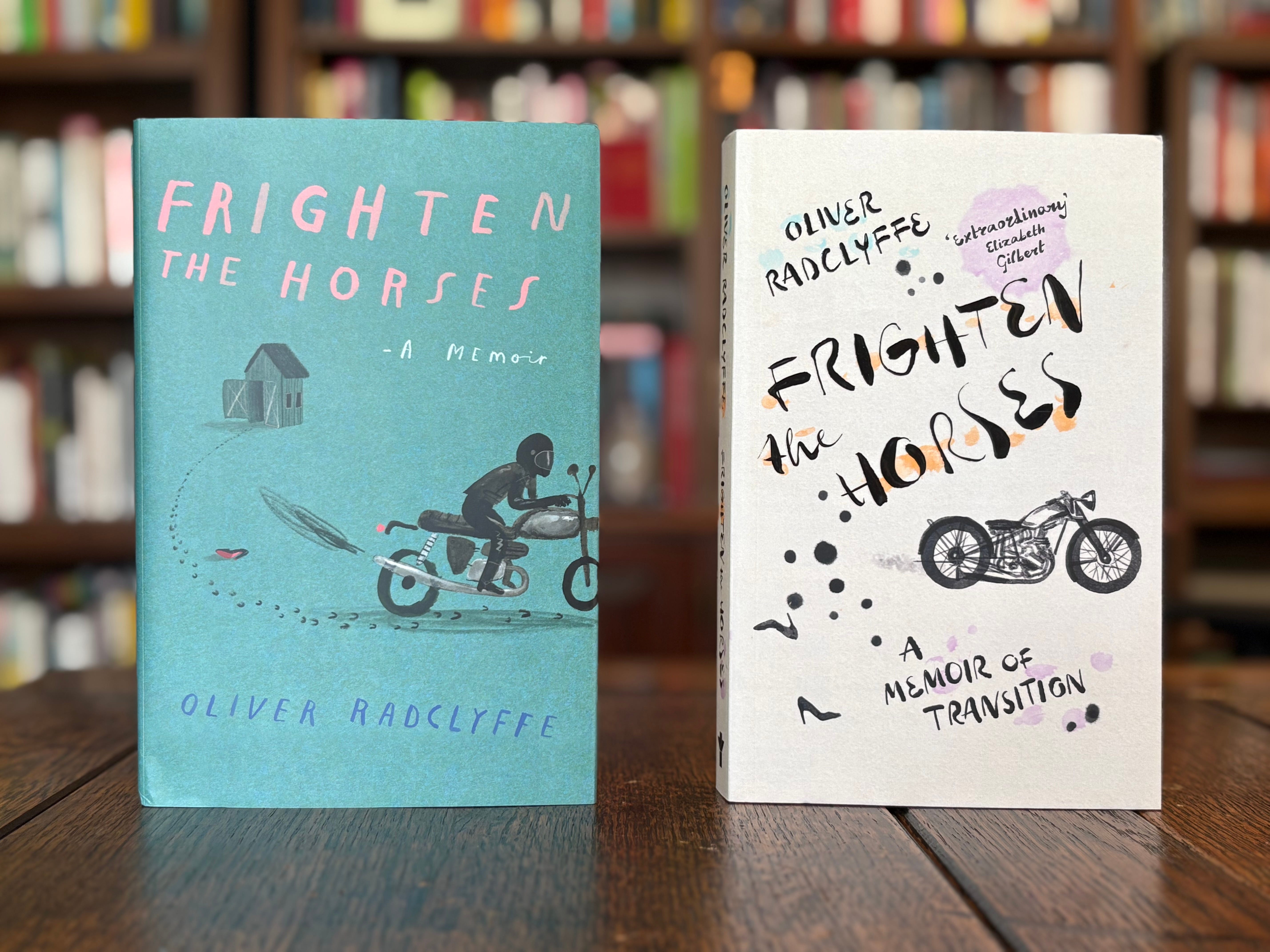
I’d like to keep these posts free for everyone, but if you’d like to support my work as a writer, please consider upgrading to a paid membership, or buy a copy of my memoir, FRIGHTEN THE HORSES—an Oprah Daily Best Book of Fall—which is out now in paperback with Roxane Gay Books in the US and Grove Press in the UK.
P.S. I forgot to say I love the image of turtles all the way up. That is magic of the highest order!
Yes! The magic is in the 1-to-1 connection between writer and reader. And it's even more amazing when we access the world of someone from before our time.
For what it's worth, an anecdote rather than a statistic, I found out about your book from my wife, who emailed me a link from the Guardian Bookshop, probably because she saw your David Bowie piece, which I had somehow missed even though I love David Bowie and was looking at The Guardian that day. All of which is to say, there's also a lot of magic in how we find the books that move us.
Looking forward to your next Magic Grow Capsule!