
Transpose: Subverse
or a short lesson in quantum physics

I’m not generally someone who tends to believe the Universe is likely to respond when I ask it for favors, but I did mention to it the other day that I’d quite like to use this Substack to promote the work of other trans artists, after which I immediately got a call from someone in the publicity department at the Barbican in London asking if I wanted to write a piece on an upcoming show. I was flying to the UK this week anyway to visit my parents, and the artistic director of the show was already someone I wanted to meet, so make of that what you will. (It’s possible that the show’s curator, ILĀ, may have a more scientific explanation for the laws of coincidence than I do, but we’ll get to that later.)
Transpose Pit Party: Subverse, which runs from 12 to 15 Nov at The Barbican, is the brainchild of the multi-genre musician and writer CN Lester. In my library at home there’s an annotated, dog eared and well thumbed copy of TRANS LIKE ME, the book they published the year I started transitioning, so they were already on my wish-to-meet list. CN has always been few steps ahead of me: back when I was inching my way out of the closet in 2010, they were organizing their first anarchic, grassroots, DIY, trans fundraiser in London. By the time I had started to address my transition, they had turned this one-off event into an annual evening of art, music, performance and poetry featuring some of the best trans artists and performers in the UK. Over the subsequent years the event moved through several locations, including Tate Modern, until it found its final resting place down in the catacombs of that behemoth of Brutalist architecture, the Barbican.
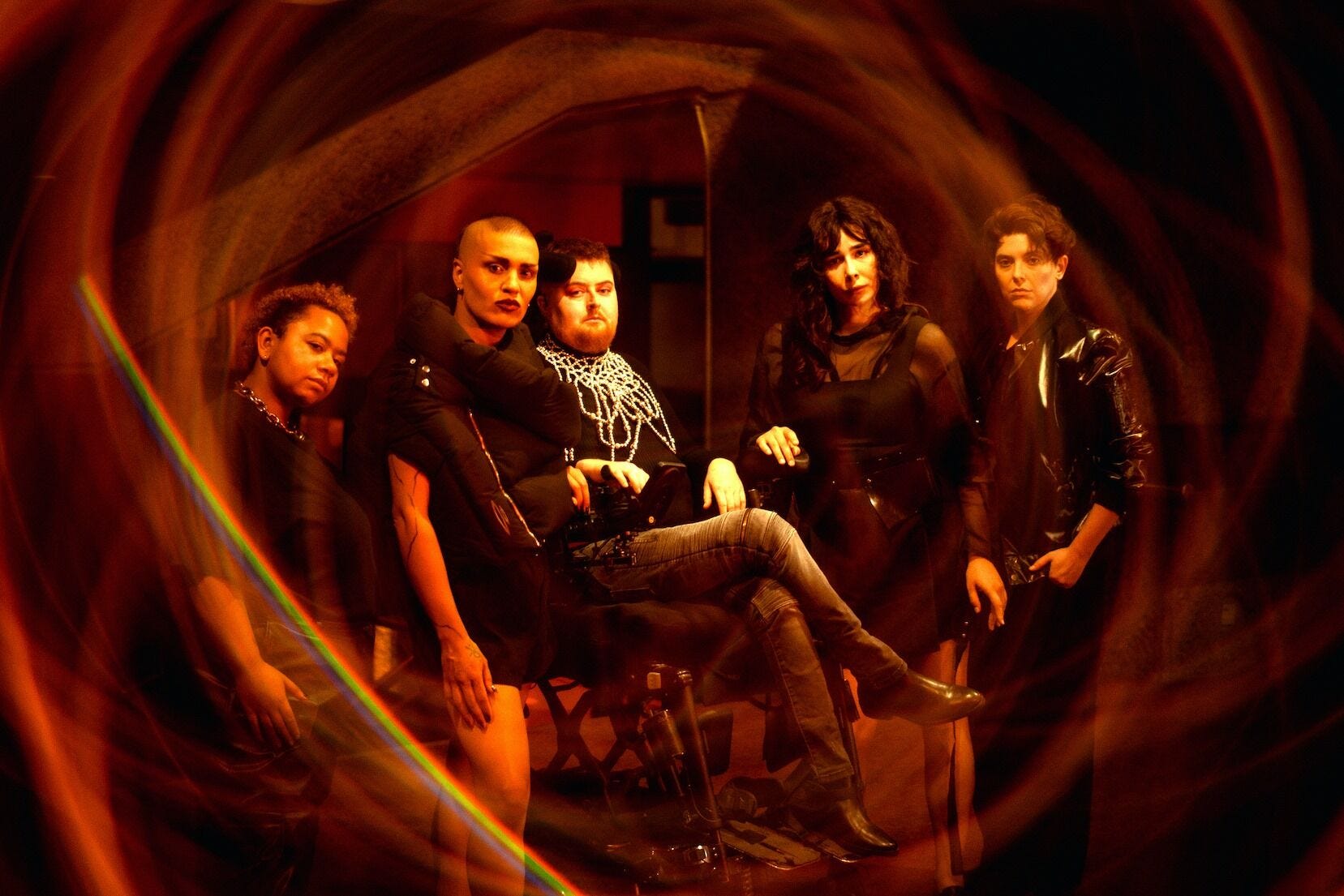
Curated this year by the multifaceted artist and producer ILĀ, Transpose: Subverse will consist of four collaborative pieces by five trans artists: CN, ILĀ, Jamie Hale, Coda Nicolaeff and Ray Felix Carter. CN met ILĀ when they joined Trans Voices, part of the London Contemporary Voices family which was founded in 2010 by ILĀ for Imogen Heap’s Love The Earth concert at the Royal Albert Hall. London Contemporary Voices went on to work with multiple artists including Florence and the Machine, U2, and Jarvis Cocker, but ILĀ and co-founder Coda Nicolaeff decided to create Trans Voices as an off-shoot of the company after witnessing a moment of transphobia during the interval of a show. To say that Trans Voices was created as a “safe space” doesn’t do it full justice: the idea was also to push back against the popular idea of mindfulness, a practice that can be hard for trans people to embrace, and be more realistic about the occasional need for—and benefits of—dissociation. “A lot of trans people find that certain areas of their voices feel problematic,” ILĀ tells me. “Nobody should be made to feel they have to conquer their discomfort to be able to sing in a range that makes them feel dysphoric.” ILĀ wanted to create a group that was more experimental and improvisational, rooted in the free-flow spontaneity of jazz or folk, where the vocalists could opt in or out, or choose their pitch and timbre, depending on what they—or their voices—felt capable of each day.
“A lot can be gained by giving ourselves permission not to have to push into the core of our discomfort, to resist this pressure to be present, to be centered, all the time,” she says. “You shouldn’t have to rip off every plaster all at once.” By collaborating and improvising, the singers found they could fill in the gaps for each other, or let the empty spaces in the harmony stand as a feature of the music itself. Inevitably, the freedom from expectation led to an increase of experimentation: by releasing the singers from the pressure to perform within certain parameters, the music became more exploratory and transformative, not less.
Sitting in a brightly-lit room between rehearsals in an oversized wool sweater with no makeup, ILĀ has a face as expressive as her music and a speaking voice like Zadie Smith, a combination which feels hypnotic in the best possible way. She talks about accepting the limitations of her voice in a manner many of us who transitioned late can relate to, the pain of missing out on something that had we been born cis, or transitioned as teenagers, we might have taken for granted. “There can be a terrible grief to it, like sometimes when I’m singing in a group I can hear these incredible notes which feel crystalline or like glass, the purity of some else’s voice that I don’t have.” She admits that there’s a degree of self-soothing in her solo work, when the lack of comparison to other voices can make her own sound more expansive. When she’s singing in a group, however, she alleviates the heartache by immersing herself in the collective sound: not only allowing other voices to carry hers to the next level, but also, as an electronic artist, changing the pitch and timbre of her voice so she feels more connected to it.
She and her collaborator on one of the new pieces for Transpose, Ray Felix Carter, have also found that using technology to transform their voices can uncover hidden possibilities for how they might manifest alternate personalities within their identities. “When you hear yourself in a different way, it can bring out a different character within you… maybe if your voice sounds huge and bellowing, or two octaves lower, then what you feel able to say, and how you express yourself, actually shifts.” ILĀ likens this to the invention of early technology: “Nobody would have been able to hear the cracked tenderness and warmth in Louis Armstrong’s voice if the microphone hadn’t been invented, so technology itself changed the way he sang. We are not just our bodies, we exist in relation to everything around us, the tools we make, the society we live in. You can’t just go and figure yourself out and then emerge as some vision of yourself and expect it to align perfectly with what’s out there. In the dawn of new technologies like AI and quantum computing, you’re entangled with it all whether you like it or not, even if you never use it, because it’s shaping everyone around you. And as trans people, as marginalized people, I think it’s really important to engage with it, and contribute to that narrative as early on as possible.”
Her background in science—she studied philosophy and physics at university—informs both how she thinks and how she creates music. While studying quantum physics she was forced to accept that there’s a hard limit to our knowledge. “My naive eighteen year old self believed I could just keep going and find out more and more and eventually I’d have a complete picture of the Universe. But actually, no.”
The more we understand about quantum mechanics, she explains, the more we realize how little we know about fundamental reality, and the more we have to accept that a lot of reality is fundamentally unknowable. “I wanted to understand how things worked and why they are the way they are and how we got here, the big existential questions, only to discover in my first year of studying quantum that you can’t know everything. For example, you can’t know the position and the momentum of a particle at the same time: by measuring something, or even looking at it, you change it, you become part of it. It was frustrating because I wanted to observe something from the outside without it knowing it was being observed, so I could really know what it was. And then I realized that this is similar in a lot of ways to the trans experience.”
I ask how she manifests this idea through her music, and she explains that the Copenhagen interpretation of quantum physics, which holds that observation collapses all possible realities into one branch, mirrors how we as trans people are often translated through the cis gaze: for example, “I see you as this, therefore this is what you are.” Whereas the Relative State interpretation holds that all possibilities remain open, that there can be many realities all at once, which feels closer to the truth of trans experience. “It’s fascinating to me that so many people have such certainty about our identities from the outside, and so much sureness, and you think, my God, we hardly know anything about anything, and you’ve got this great certainty about what I am and what I’m not?” However, she came to realize that if trans people are inextricably entangled with other people’s perceptions of us, then that should inform her creative process. If we are thus entangled, why not play on that entanglement with sound?
CN and ILĀ first collaborated artistically on UN/BOUND, an immersive sound installation which was part of a show at the Barbican earlier this summer. An interactive work that used auditory holograms to break down the barriers between cis and trans voices, at different moments, audience members could sing into one of four microphones positioned inside the space and—via quantum technology and a custom built ethical IA small-data model created by ILĀ—hear the voices of the Trans Chorus harmonizing with their own. This meant the audience could experience the sensory empathy of becoming part of the chorus, and the feeling of separation between trans and cis would fall away. Art is particularly good at breaking down these barriers, CN points out, perhaps more so sometimes than the spoken or written word, which can get caught in the intellectual mechanisms of the brain. Both CN and ILĀ reject the idea that trans art should be demarcated, or siloed off from an imaginary “universal” art experience, which, as CN notes, usually means cis, male and white.
The Barbican is notoriously hard to navigate, as I discover as the press officer leads us through the lower level to The Pit, a black box theater filled with set builders who are transforming it into an architecturally minimal set. Peeking into the Tardis-like storeroom next to the theater, ILĀ quips that she wished they could stage the show in there, among the shelves of spotlights and piles of unused scaffold poles. The context of place is important to how both ILĀ and CN create their performance pieces, the interaction between performer and audience being paramount. For CN, the guiding principle of Transpose has been to never make assumptions, not only about the artists but the members of the audience too, in the hope that they might react to such barrier-breaking sensory and empathetic experiences by becoming participatory creatives in their own right.
For ILĀ, it comes back to the quantum relationship between subject and object. She says the way music is released digitally on platforms such as Spotify can become “unnatural, because you feel very disconnected from the people you’re trying to reach. So it can be the ultimate form of dissociative experience, in that you’re literally not there.” In a live performance, however, she’s in an entangled state with the audience: they become one system. ILĀ extends this desire for inclusion to the location in which she performs, so that each performance becomes distinct. For Transpose they want to tap into the natural sounds that already exist deep within the labyrinths of the Barbican, so that any subsequent digital version exists purely as a consequence of this particular live experience, a way for the audience to reconnect with the event after the fact.
Of course, this makes it particularly painful that I have to fly back home before the show starts, but that just means we have to figure out how to get them to bring it over to the states and see how the sounds of New York might contribute to the work. In the meantime, if any of you live in London and can attend the show for me so I can experience it vicariously through you, I’d be most grateful. It goes without saying that supporting the arts is fairly important at the moment, and if you’ve ever wanted to be a legitimate part of a quantum AI experience, now’s your chance.
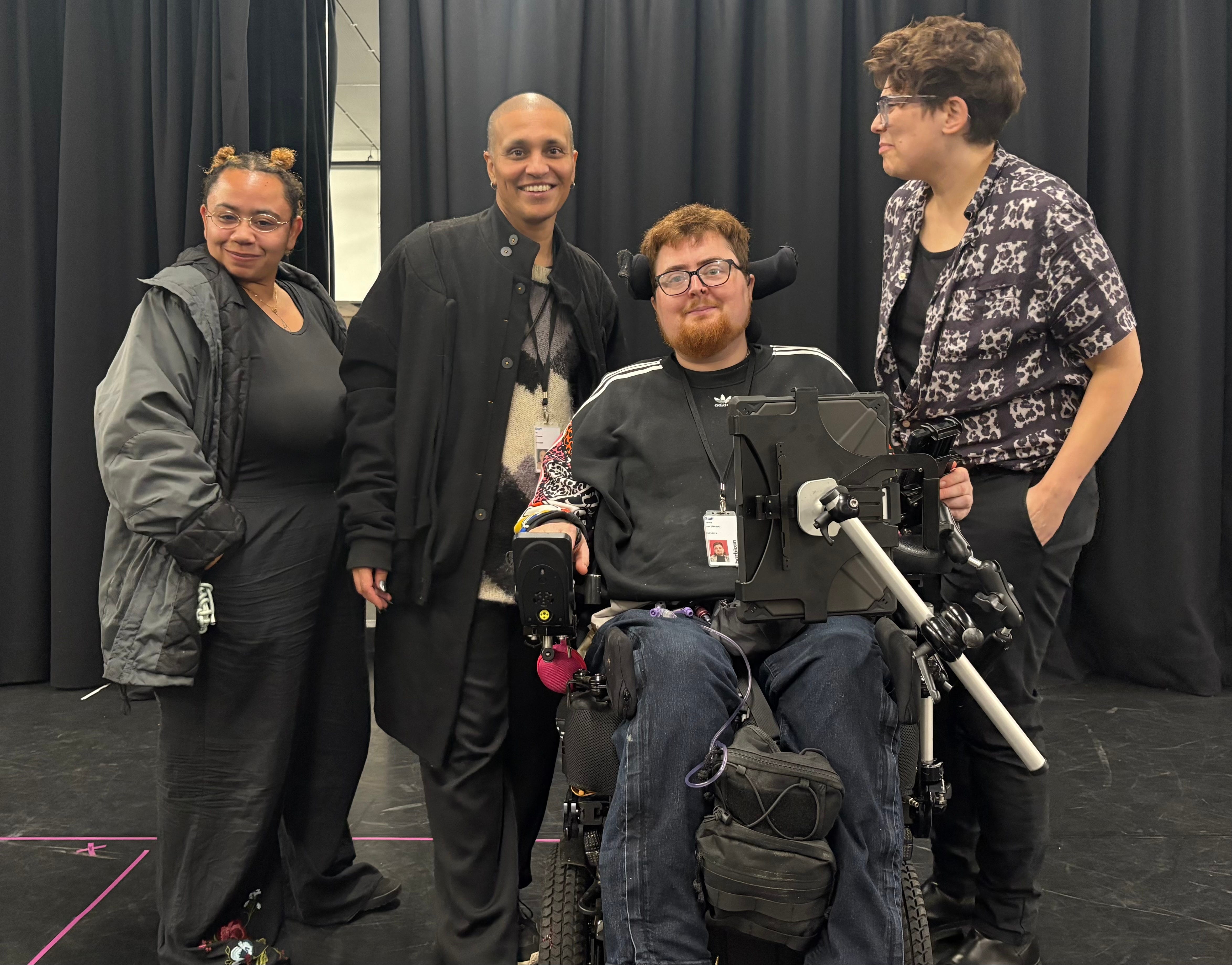
Transpose Pit Party: Subverse will be on at the Barbican Centre in London from Wed 12 to Sat 15 November. Post-show talk Fri 14, BSL interpretation Sat 15, all performances are wheelchair accessible.
I’d like to keep these posts free for everyone, but if you’d like to support my work as a writer, please consider upgrading to a paid membership, or buy a copy of my memoir, FRIGHTEN THE HORSES—an Oprah Daily Best Book of Fall—which is out now in paperback with Roxane Gay Books in the US and Grove Press in the UK. A valuable alternative narrative to the loss and pain that queer history has too often insisted on — New York Times; Humorous and heartwarming — LA Review of Books; It’s the voice that makes this memoir stand out. This is a writer who can capture any moment with a dazzling, insightful, at times musical phrase — Oprah Daily; This book is sharp as razors, but it also pulses with a passionate, desperate, human urgency for truth and liberation — Elizabeth Gilbert; The finest literary telling of the experience of gender transition that I’ve ever read — Kate Bornstein
I also have a dog-eared copy of CN Lester's book. Thanks for this piece.